A Legacy of Play: Inside the Carlson Family’s Multi-Generational Journey Through the Toy Industry
by The Bloom Report | 20 Nov 2025
The Bloom Report
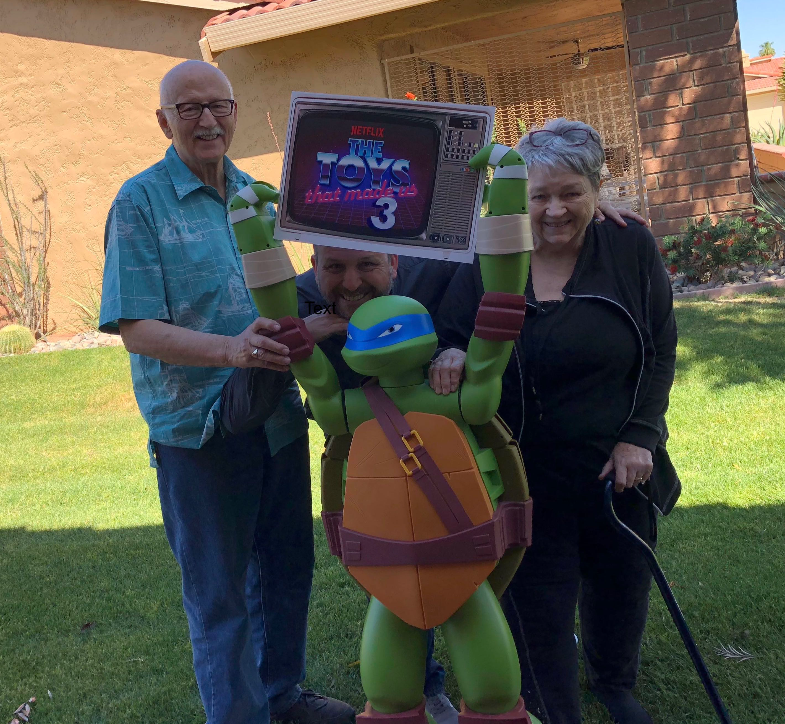
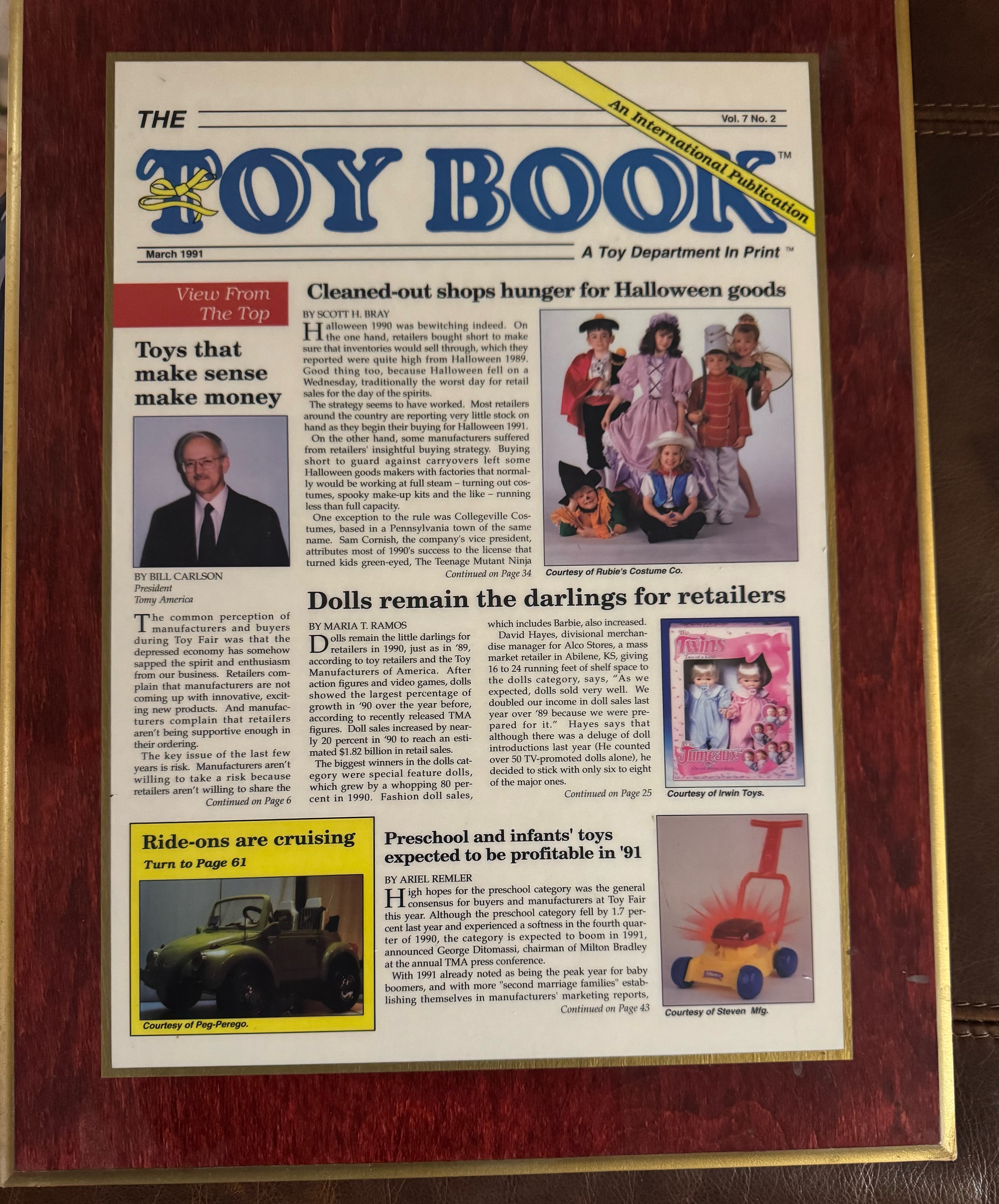
When Bill Carlson walked into Doughboy Industries as a young college graduate, he had no idea he was stepping into a career that would shape not only his life, but an entire family legacy. Doughboy was best known for its above-ground swimming pools, but tucked inside its plastics division was a single whimsical product: Bobo the Punching Clown. The inflatable weeble-wobble toy didn’t just bounce back when kids hit it—it sparked Bill’s lifelong fascination with what toys could be.
That plastics division, however, was under pressure. Doughboy’s flamboyant CEO, E.J. Cashman—famous for his fur coat and walking cane—once strode into the department and asked pointedly, “When are you guys going to make some money? If you don’t soon, I’ll close you down.” It was a moment that stayed with Bill for decades. That urgency, he later said, made him better.
But the true turning point came in 1962, when Bill’s boss, Jack Kohler, left Minnesota for Southern California to join Eldon Industries. Before long, Jack urged him to follow. It was a life-altering ask. Minnesota was home—family, roots, comfort—but opportunity called. Bill and his wife, Sharon, made the courageous decision to start over in California, joining a toy company best known for its road-racing sets and oversized toy trucks. The Carlsons’ baby daughter Susie even spent part of her infancy being wheeled around in one of those trucks by her older siblings.
At Eldon, Bill wore many hats—sales administration, shipping, customer service. He recruited a fellow Midwesterner, Don Nelson, and together they tackled Eldon’s biggest problem: its notoriously inconsistent shipping performance. Within a year, they transformed the company into one of the top five in the industry for on-time delivery—a turnaround that caught widespread attention.
His next chapter brought him back to Minnesota when Leisure Dynamics acquired Eldon. Bill was tasked with integrating the two companies. He learned the games business, expanded his experience, and—without knowing it—set the stage for what would become the defining opportunity of his career.
Launching Tomy’s U.S. Ascension
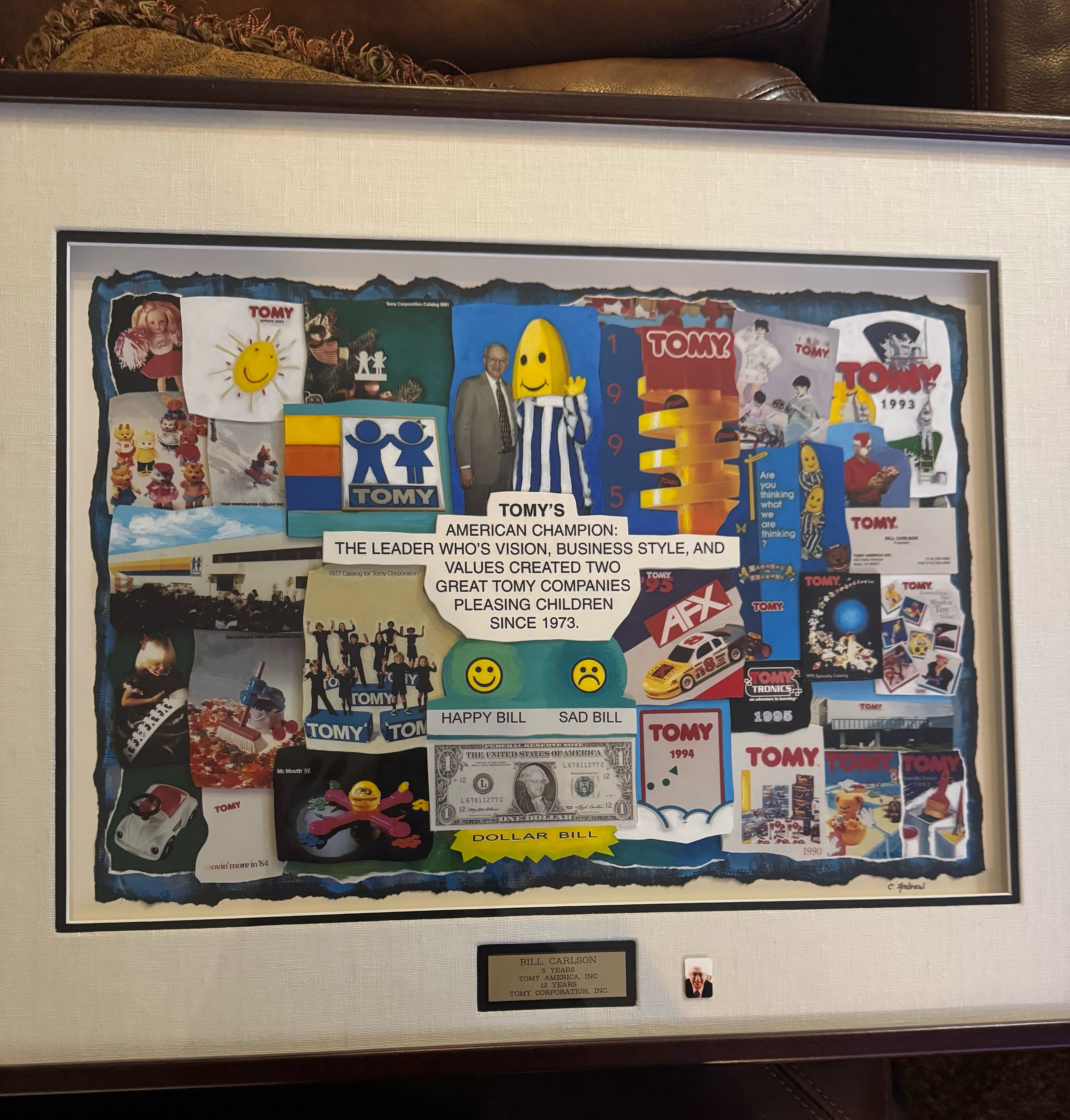 Tomy had enjoyed success with Billy Blast-Off, a product developed with Eldon, and the relationship introduced Bill to key Tomy executives. In 1973, the company approached him with a bold proposal: build Tomy’s U.S. business from the ground up. Bill would lead Sales, Marketing, and Customer Service, while his colleague Carl Voce would oversee Engineering and Operations.
That fall, the newly formed team tested three products, including the TV-promoted Nutsy Tennis, which sold through in every market where it aired. It was the spark Tomy needed, and by 1974 the company was beginning its rise as a trusted brand in American toy aisles.
The Birth of Cricket—and a $50 Million Breakout
By 1985, Bill’s reputation for operational excellence and market insight earned him the role of President of Playmates Toys’ U.S. division. At the time, U.S. sales barely reached $2 million. Playmates needed a breakthrough.
Bill found it in a familiar place: the inventor community. He revisited a relationship from his Eldon days with inventor Larry Jones. Jones had been experimenting with interactive plush concepts, but Bill saw something bigger: why not put the technology into a doll?
The result was Cricket—a servo-motor-powered talking doll whose mouth and eyes moved in sync with audio from a cassette player built into her back. The illusion was magical, and Bill believed in her so wholeheartedly that he refused to ship her separately when traveling. “Cricket needs me,” he would tell airline staff as he buckled her into the seat beside him.
His conviction resonated. After a show-stopping presentation at Toy Fair, Cricket became one of the hottest toys of the era. Playmates’ U.S. business skyrocketed from $2 million to more than $50 million virtually overnight.
Turtles in a Half Shell—and a Revolution in Boys’ Action
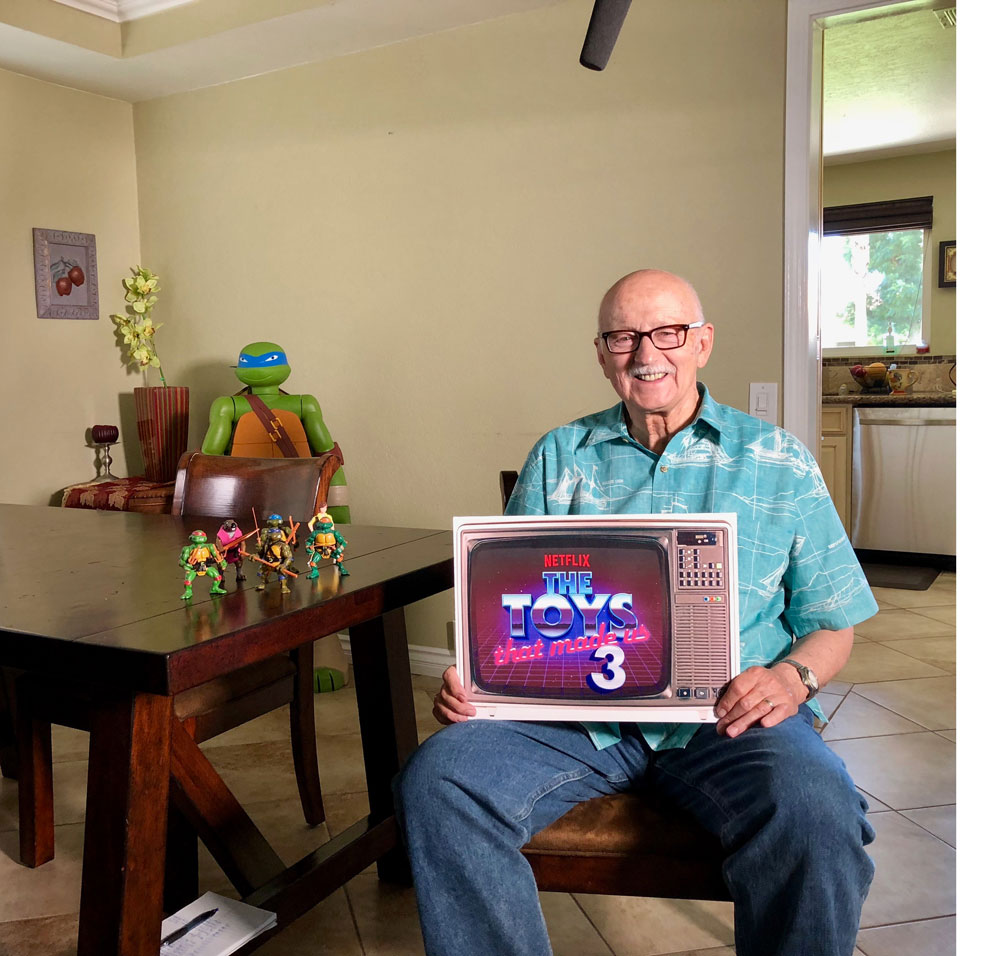 Then, in late 1987, a little-known concept arrived in Bill’s office: Teenage Mutant Ninja Turtles. It had already been rejected by multiple major toy companies. But Bill saw what others missed—not just characters, but a brand identity no competitor could duplicate. The name alone was unforgettable.
To make the property viable, he made a bold request: asking Playmates’ Hong Kong leadership for $1 million to fund a series of animated episodes. The animation would serve one purpose—to give the toys a world to live in.
When pitching retailers, Bill donned Raphael’s red mask, showing early footage of the cartoon and explaining why these sewer-dwelling heroes were unlike anything on the market. Some buyers were skeptical—others outright confused. But Bill’s belief was contagious. On an East Coast swing through Toys “R” Us, KB Toys, Child World, Zayre, and others, doors began to open.
Retailers agreed to give the line a chance. The rest became toy history.
A Family Grows Into the Business
Toys weren’t just Bill’s work—they were part of family life. New samples came home constantly, which meant the Carlson children became unofficial (and very honest) product testers. Bill relied on a simple benchmark: Can a five-year-old play with it the way we intend? Their answers often shaped final design decisions. He called this “can-do testing,” ensuring the play pattern was appropriate for the target age.
Over time, many family members got their toes wet while others built their own careers in the industry:
- Sarah Carlson Murray began in Tomy’s marketing department in the late ’70s and early ’80s.
- Susie Carlson Neff contributed across marketing, sales administration, and trade shows at both Tomy and Silverlit.
- Tim Carlson spent summers performing quality-control toy testing for Tomy’s U.S. operation in the late ’70s and early ’80s.
- Buffy (Carlson) Arno demonstrated toys at the International New York Toy Fair in the ’90s.
- Ben Carlson joined Strottman International in 2002, eventually becoming VP of Human Resources and supporting the company’s expansion into toy development through its Luki Lab division.
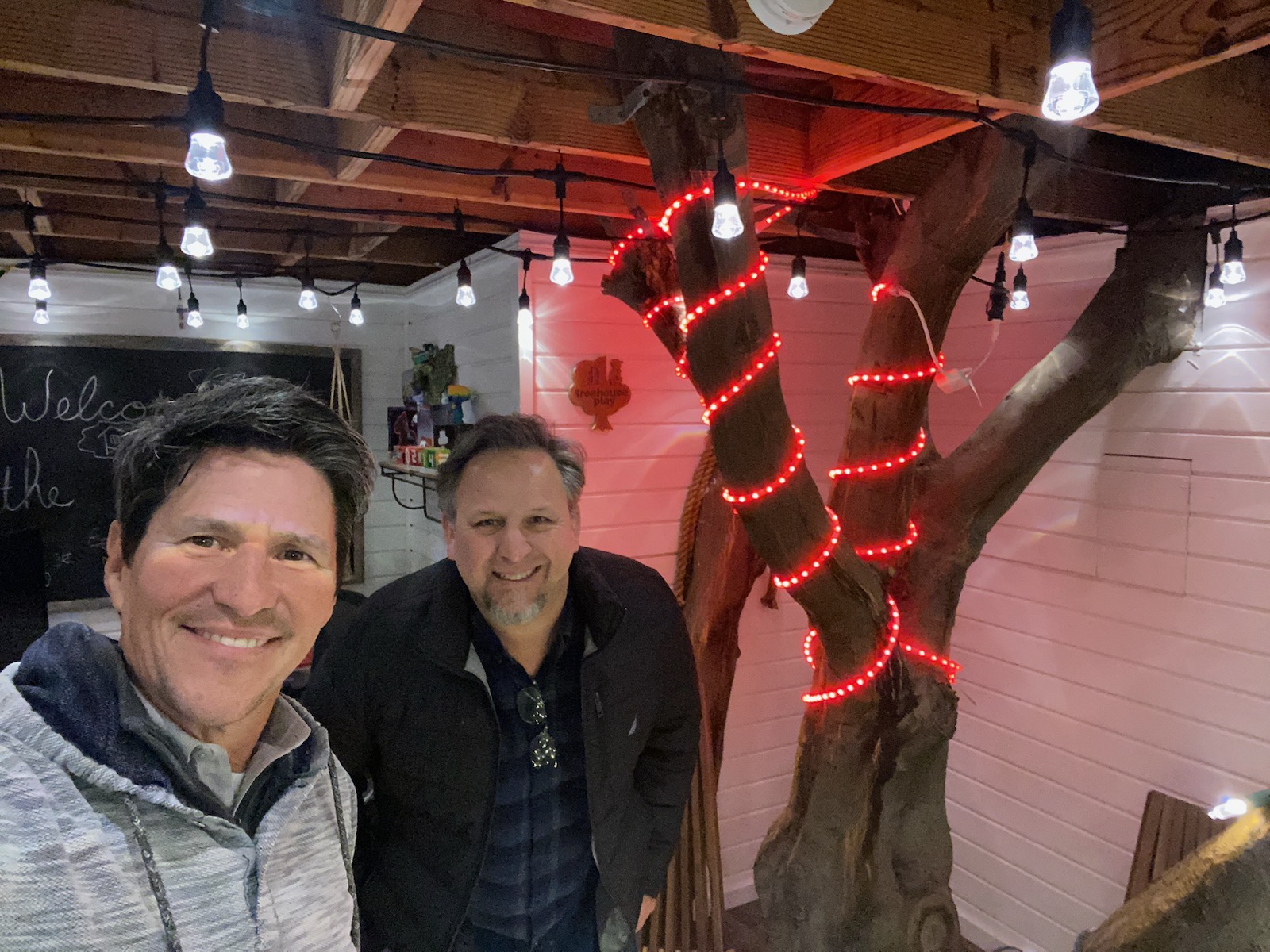
- Josh Carlson launched his career at Tomy America in 1996, moved to Strottman International in 1999, and later joined JMP Creative, where he played a key role in growing the studio into one of the world’s most influential toy invention teams. He eventually founded Treehouse Play—working, quite literally, from a backyard treehouse.
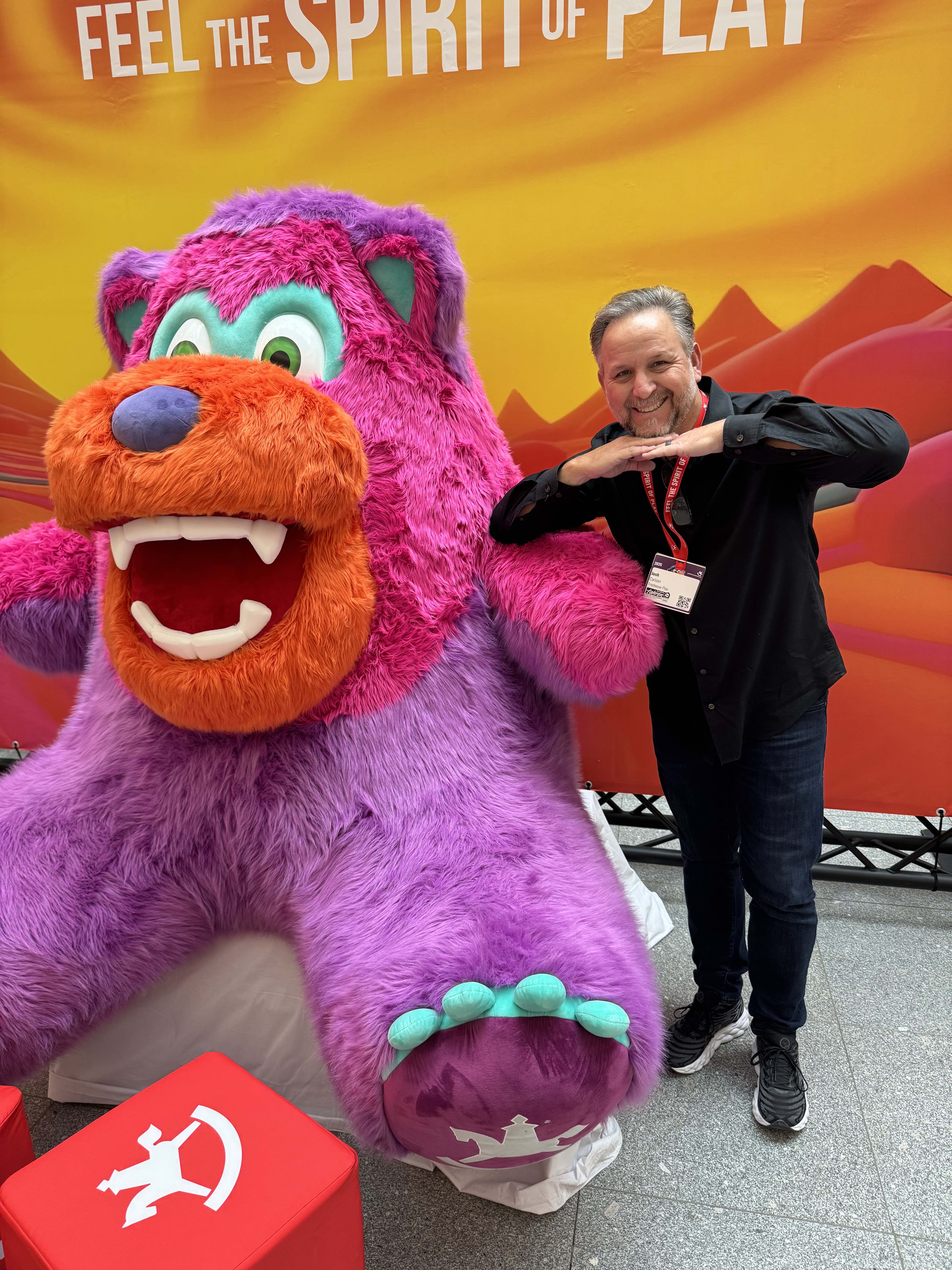 Josh later formed additional creative ventures—including Gee Tree & Mee (with Nick Grisolia and Paul von Mohr, both inventor legends in their own right), collaborating on major projects that leveraged their combined strengths; and Awagama (with Jeremy Madl and Scott Wetterschneider), developing turnkey toy programs spanning concept development, branding, play pattern, sourcing, and manufacturing.
Awagama partnered with Playmates Toys to launch Cheeky’s, a collectible vinyl platform that debuted with TMNT-themed variants—a poetic return to the brand that helped define his father’s career. Another collaboration, Ring Slingr—created by Awagama and distributed online by All 4 Fun Toys—introduces a new light-up twist to the fidget category and is now available on Amazon. More exciting products are in development for 2026 and beyond, with announcements the industry will soon hear about.
Will the Next Generation Carry the Torch?
Today, the third generation of Carlson’s is still exploring where their passions lie. None have entered the toy industry—yet. But one of Josh’s children, Ethan, is studying engineering and design and has already inspired a still-confidential product line.
As with all things in toys, time will tell.
An Industry Transformed
Bill watched the toy business shift dramatically over his decades in it. The fall of Toys “R” Us—once unthinkable—hit particularly hard. The rise of e-commerce reshaped shopping habits. Kids’ media splintered into endless digital platforms, making it harder than ever to reach young audiences with new brands.
Gone are the days when a Saturday-morning cartoon could launch a hit overnight, or when in-store demonstrations—once essential to companies like Tomy—were commonplace.
Yet one truth, Bill always said, remains constant: kids need hands-on play. Technology evolves. Habits shift. But the core of childhood wonder doesn’t change.
The Spirit of Play Lives On
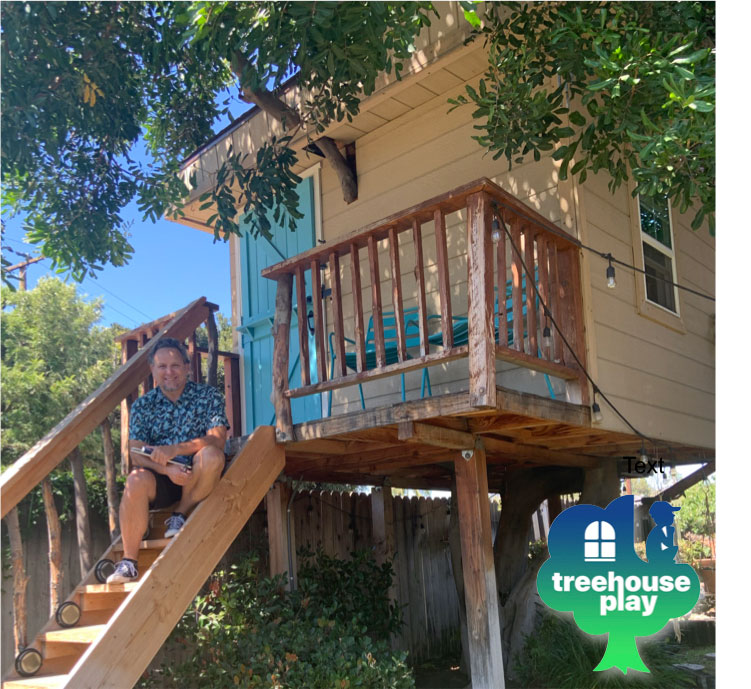 Ask Josh what drives him today, and he points to the jingle that defined his childhood—reimagined slightly for his own company:
“I don’t want to grow up, I’m a Treehouse Play kid.”
It captures the essence of the Carlson family’s legacy: a belief that toys matter, that play shapes childhood, and that creating joy for kids is one of the most meaningful—and fun—careers anyone could choose.
And after more than five decades, the Carlson family’s story in toys is still being written.

Recent Blogs
Press Release
Abacus Brands Brings the Toy Community Together for 2026 The LA Showcase Official After Party
The Bloom Report
Toy Night at the Laugh Factory (2026)

The Bloom Report
Brian Weiss: Goliath Takes Action Against Counterfeit Clickeez
General
Katherine Kaiser: The World Of Test Modes and Revision Numbers In Bop It
The Bloom Report
Liam O'Malley Talks Working on the Bloom Report, Collecting Toys, and Innovation in the Toy Industry
See more
Recent Wiki
BOOK REVIEWS
Game Review: Yahtzee

COMPANIES
Spielwarenmesse Invitation for game authors: Registration until 15 December 2026
BOOK REVIEWS
Game Review: Peekimo
PEOPLE
Peter Cullen and the Voice That Helped Transform a Toy into an Icon
PEOPLE
Fei Feng Talks Growing Orbio, Leading with Joy, Inspirations and More!
See more
POP's Got Talent
POP Entertainment
Randy Klimpert Shares his Ukulele Collection
POP Entertainment
Steve Casino Peanut Art
POP Entertainment
Everyone's Talking about POP!
POP Entertainment
Princess Etch - a Multi-Talented Etch A Sketch Artist
POP Entertainment
Joseph Herscher of Joseph' s Machines.
See more
Recent POPcast
Hidden Role: The Brains Behind your Favorite Games
Brent Bushnell talks Two Bit Circus, VR, & STEAM (Part 1)
Hidden Role: The Brains Behind your Favorite Games
Tim Walsh Celebrates the 30th Anniversary of Blurt!
Hidden Role: The Brains Behind your Favorite Games
Connie Vogelmann designed Apiary & Wyrmspan!

Hidden Role: The Brains Behind your Favorite Games
Bob Fuhrer... Is THE Crocodile Dentist!

Hidden Role: The Brains Behind your Favorite Games
Tom Dusenberry... Bought Atari, Wizards of the Coast, and Avalon Hill!
See more
POPDuos

POPDuos: Interviews with Legends and Leaders
POPDuo: Richard Dickson, Mattel’s President & COO, and Kedar Narayan, Young Inventor Challenge AMB

POPDuos: Interviews with Legends and Leaders
POPDuo: Will Shortz and Josh Wardle

POPDuos: Legends and Leaders Explore Creativity
POP Duo: Elan Lee, Co-Founder, Exploding Kittens.and Jeff Probst, Host and Exec Producer, Survivor
POPDuos: Legends and Leaders Explore Creativity
POP Duo: David Fuhrer, MNG Director, Blue Sq Innovations & Shawn Green, past Dodgers & Mets MLB Star

POPDuos: Legends and Leaders Explore Creativity
POP Duo: Bob Fuhrer, Founder, Nextoy and Tom Fazio, Golf Course Designer
See more
Featured Articles
The Bloom Report
Toy Inventors--The Heart and Soul of the Industry
The Bloom Report
Brian Turtle: 'Endless' Stories, Advice, Kevin Bacon and More! tBR Person of the Week
Biographies and Interviews
Jonathan Levy on Jon2.0 - from Co-Founding Mastermind Toys to Spin Master
Biographies and Interviews
Andrew Perlmutter's Journey from Glencoe to Funko with Crazy Ideas that turned out Golden
See more