Bill Southard: How The Brand Influence Equation Has Changed
by The Bloom Report | 12 Aug 2025
Industry Commentary, Op-Ed

What Today’s Toy Brands Must Do to Stay Credible and Connected
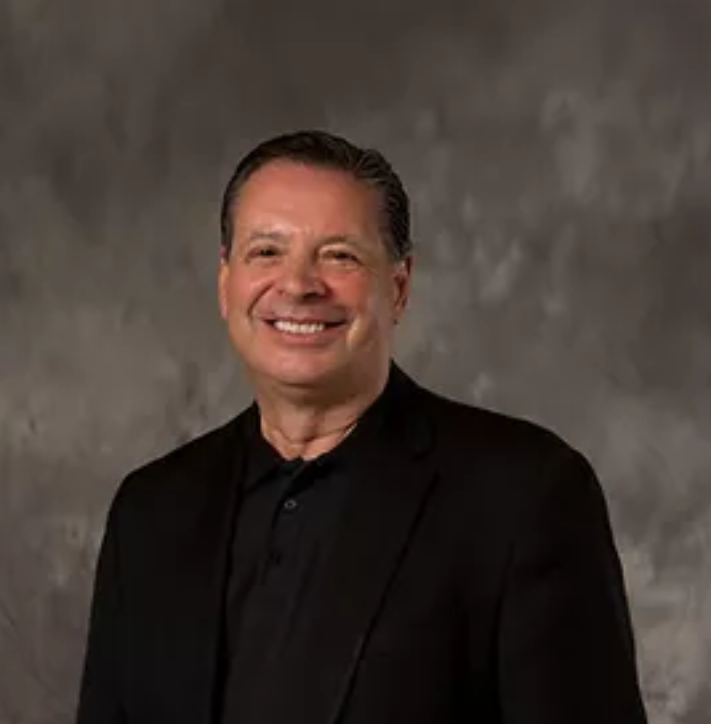
Author: Bill Southard, Founder and CEO Southard Communications, Chair of Marketing Committee for Public Relations Global Network (PRGN)
While toy industry sales figures from the first half of the year seemed strong according to Circana, there’s still a myriad of challenges confronting the industry this year, particularly with the 30% tariffs on China imports staying intact. While dollar sales increased by 6% and units sold were up by 3% and average selling price (ASP) increased by 3% according to Circana, the impact of tariffs and higher prices may still be felt during the second half of the year. Through this all, brands must not lose sight of another challenge – understanding the significant transformation taking place around brand influence. A key takeaway, for example, from a global survey conducted by Public Relations Global Network (PRGN) on influence indicates that evolving customer expectations and the rise of social media and influencers are driving this change.
The survey reveals some interesting insights including that influence, once treated as a by-product of visibility, has become the metric that defines long-term relevance.
The shift is being driven by rising expectations and a growing demand for authenticity. Today’s customers expect brands to be good corporate citizens, treat employees well, and communicate their values clearly. As a result, brand influence is no longer a communications function alone. It now reflects the entire organization’s behavior, from leadership decisions to employee advocacy.
These sentiments rose to the top in recent research conducted by the Public Relations Global Network (PRGN), which partnered with Researchscape to survey more than 550 marketing, communications, and business leaders worldwide. While the study confirmed the growing importance of brand influence, which was cited as “extremely” or “very” important by 89% of respondents, it also revealed some gaps. With nearly half of respondents reporting that their current approach to building brand influence needs to be improved, the tension between aspiration and execution is real.
What the Most Influential Brands Do Differently
The brands most admired for their influence (such as Apple, Coca-Cola, and Nike) were recognized for clarity, consistency, and the ability to inspire trust across audiences. They show up with purpose across platforms. They create experiences that reflect what they stand for. And they ensure that internal culture matches external positioning.
When asked which factors most strongly influence brand perception, survey respondents highlighted five characteristics: reputation and trust (both cited by 94% of leaders), followed by relevance to consumers (87%), authenticity (84%), and emotional connection (77%).
Furthermore, the survey asked which channels have the highest impact on brand influence and not surprisingly, social media made perhaps the greatest surge with 76% listing it as the most influential channel to drive brand influence. Earned media was second globally at 70% and even higher in North America at 74%. The other channels included thought leadership at 69%, employee advocacy at 57%, owned media at 54%, and paid media at 41%. One would think as recent as 5=6 years ago paid media would have been at the top and now it is less than 50% saying it is the principal channel in driving brand influence.
Employees Play an Often-Unrecognized Role in Shaping Brand Perception
One of the most underleveraged drivers of brand influence is the employee voice. Not the scripted kind in a corporate video, but the organic, unscripted kind that shows up in LinkedIn posts, onboarding feedback, and hallway conversations.
When employees are aligned with the brand’s purpose and feel invested in its trajectory, their influence becomes an extension of the brand’s. When they are not, the disconnect shows. That’s why internal engagement has become non-negotiable.
The research reinforces this point: 65% of respondents cited employee trust as a major factor influencing brand credibility. That is a wake-up call for organizations that still treat internal engagement as an HR issue rather than a brand driver.
Reputation Takes Time, But It Pays Dividends
Influence isn’t won with a single campaign. It’s built through behavior. And while that’s a slower path, it’s also more resilient. In times of disruption, brands that have invested in credibility and consistency fare better. They’re more likely to be forgiven when they stumble and more likely to be followed when they lead.
Too often, brands emphasize driving sales at the expense of reputation. When brands focus solely on conversion, they risk missing the deeper opportunity to build influence, create long-term value, and foster resilience across cycles. The research suggests that leaders increasingly recognize this, as brand equity and customer loyalty are gaining traction as key influence metrics.
For companies without built-in name recognition, third-party validation is especially important. Editorial visibility, thought leadership, and credible partnerships may not always produce immediate clicks, but they build the kind of trust and alignment that compound over time. Notably, the study found that earned media is still viewed as one of the most effective tools for building influence, especially for brands that cannot rely on legacy reputation.
Measurement Needs to Catch Up
Influence is shaping where brands invest and how they grow, but many brands still measure success with outdated tools. Clicks and reach have their place, but they cannot tell you whether people believe you, trust you, or want to associate with your brand.
The PRGN study found that while customer loyalty and brand equity are on the rise as influence metrics – selected as priority metrics by 81% and 53% of respondents, respectively – many organizations still default to surface-level performance data. That disconnect is holding brands back from tracking what actually matters.
The takeaway? If you are only tracking performance, you're missing perception. And perception is where influence begins.
A New Playbook for Influence – Moving Forward
When asked want brands wanted moving forward, 60% said better measurement and analytics, 57% wanted more guidance on digital and social media strategies, 57% indicated purpose-driven branding and ways to leverage to drive influencer and 36% said more strategic influencer partnerships.
This isn’t just a trend. It’s a reset. Influence has become a core strategic driver that touches brand, culture, leadership, and experience. The brands that win are the ones that recognize that influence cannot be bought. It must be built, and rebuilt, every day.
In a world that is moving faster and expecting more, toy and game brands that lead with credibility, consistency, and conviction will set the pace. The full PRGN study for more insights on how global brands are earning influence today is available at www.prgn.com and for more information you can reach out to Bill Southard of Southard Communications at bill@southardinc.com .


Recent Blogs
Press Release
Abacus Brands Brings the Toy Community Together for 2026 The LA Showcase Official After Party
The Bloom Report
Toy Night at the Laugh Factory (2026)

The Bloom Report
Brian Weiss: Goliath Takes Action Against Counterfeit Clickeez
General
Katherine Kaiser: The World Of Test Modes and Revision Numbers In Bop It
The Bloom Report
Liam O'Malley Talks Working on the Bloom Report, Collecting Toys, and Innovation in the Toy Industry
See more
Recent Wiki
BOOK REVIEWS
Game Review: Yahtzee
COMPANIES
Spielwarenmesse Invitation for game authors: Registration until 15 December 2026
BOOK REVIEWS
Game Review: Peekimo
PEOPLE
Peter Cullen and the Voice That Helped Transform a Toy into an Icon
PEOPLE
Fei Feng Talks Growing Orbio, Leading with Joy, Inspirations and More!
See more
POP's Got Talent

POP Entertainment
Randy Klimpert Shares his Ukulele Collection
POP Entertainment
Steve Casino Peanut Art
POP Entertainment
Everyone's Talking about POP!
POP Entertainment
Princess Etch - a Multi-Talented Etch A Sketch Artist
POP Entertainment
Joseph Herscher of Joseph' s Machines.
See more
Recent POPcast

Hidden Role: The Brains Behind your Favorite Games
Brent Bushnell talks Two Bit Circus, VR, & STEAM (Part 1)
Hidden Role: The Brains Behind your Favorite Games
Tim Walsh Celebrates the 30th Anniversary of Blurt!
Hidden Role: The Brains Behind your Favorite Games
Connie Vogelmann designed Apiary & Wyrmspan!

Hidden Role: The Brains Behind your Favorite Games
Bob Fuhrer... Is THE Crocodile Dentist!

Hidden Role: The Brains Behind your Favorite Games
Tom Dusenberry... Bought Atari, Wizards of the Coast, and Avalon Hill!
See more
POPDuos

POPDuos: Interviews with Legends and Leaders
POPDuo: Richard Dickson, Mattel’s President & COO, and Kedar Narayan, Young Inventor Challenge AMB

POPDuos: Interviews with Legends and Leaders
POPDuo: Will Shortz and Josh Wardle

POPDuos: Legends and Leaders Explore Creativity
POP Duo: Elan Lee, Co-Founder, Exploding Kittens.and Jeff Probst, Host and Exec Producer, Survivor

POPDuos: Legends and Leaders Explore Creativity
POP Duo: David Fuhrer, MNG Director, Blue Sq Innovations & Shawn Green, past Dodgers & Mets MLB Star

POPDuos: Legends and Leaders Explore Creativity
POP Duo: Bob Fuhrer, Founder, Nextoy and Tom Fazio, Golf Course Designer
See more
Featured Articles
The Bloom Report
Toy Inventors--The Heart and Soul of the Industry
The Bloom Report
Brian Turtle: 'Endless' Stories, Advice, Kevin Bacon and More! tBR Person of the Week
Biographies and Interviews
Jonathan Levy on Jon2.0 - from Co-Founding Mastermind Toys to Spin Master
Biographies and Interviews
Andrew Perlmutter's Journey from Glencoe to Funko with Crazy Ideas that turned out Golden
See more