Designing Play Across Worlds: A Feature Interview with Prapti Verma
by The Bloom Report | 07 May 2026
The Bloom Report
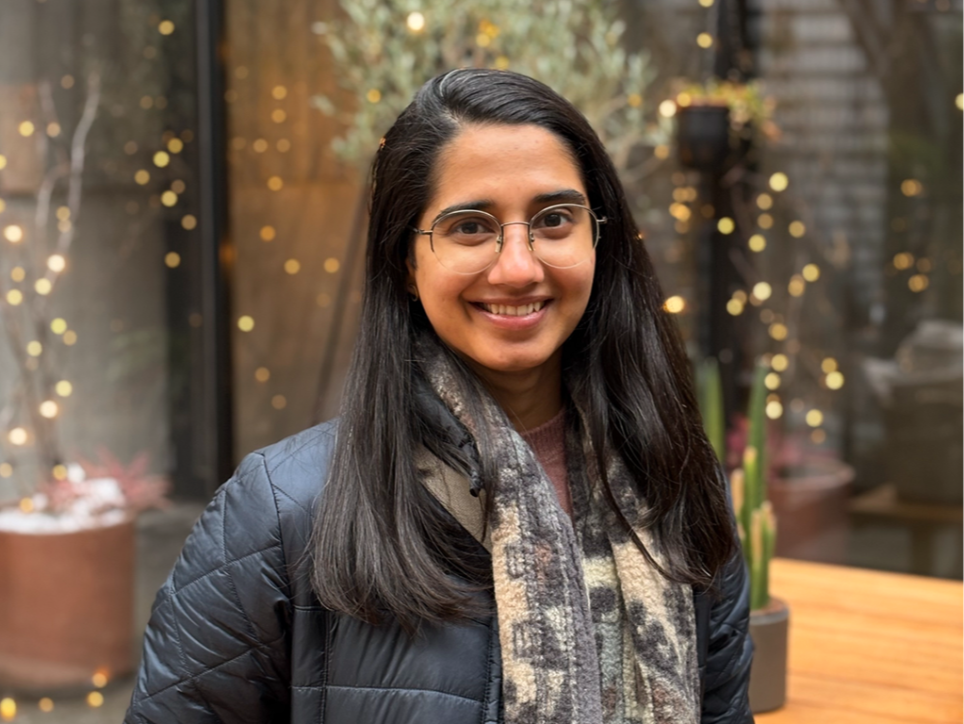

Hi Prapti, thanks for taking the time to speak with us. You work in an industry that most people interact with as consumers without ever thinking about who makes it all. What's it actually like on the inside?
It's a wonderfully eclectic world. You're surrounded by people who are deeply curious, endlessly creative, and care a lot about what ends up in a child's hands. There's a lot of craft that goes into products that might look simple from the outside: the research, the iterations, the back-and-forth with manufacturers over something as specific as the weight of a card or the texture of a playing piece. When you finally see a finished product and think about the journey it took to get there, it never gets old.
It's also a surprisingly small industry. Everyone seems to know everyone, which makes community — like WiT (Women in Toys, Licensing & Entertainment), which I'm involved with through the Boston chapter — feel genuinely important.
How did you find your way into toy and game design? It doesn't seem like an obvious destination.
It snuck up on me. I was studying engineering in India and more than halfway through when I had an unsettling moment with myself: I didn't want to do this for the rest of my life. The turning point came from seeing seniors from my college who had gone on to study product design. That opened up a world I hadn't considered. I had always been drawn to the worlds that Disney and Pixar built and I'd had a creative streak since childhood. So I applied to design programs: animation, and toy and game design. Toy and Game Design was only offered at one school in India at the time, the National Institute of Design. Once I was part of the program, one of nine students, I discovered I loved making physical things far more than digital ones, and never looked back.
Your first major role was at The Walt Disney Company, working on Marvel toys. What did that experience teach you?
It was a formative experience, and a specific one. The brief was to design Marvel toys for the Indian market, made locally. A lot of my time was spent on research: understanding consumer behavior, buying patterns, what middle-class Indian families wanted and could afford, and crucially, what they expected a toy to do for their child.
The Indian toy market has a very strong expectation of educational value. Parents ask 'what will my child learn from this?' before almost anything else. In the US, I observed a much greater willingness to invest in toys for the sake of play itself — for entertainment, imagination and fun — without needing a strong educational justification. Designing within those constraints, and then watching how those insights shaped the products themselves, gave me a grounding in consumer-centered thinking that I've carried forward.
From Disney you've worked across quite a range — Skillmatics in India, Little Passports in the US, and now Thames & Kosmos. What does that breadth feel like from the inside?
Each company taught me something different. At Skillmatics in Mumbai, I grew from a product designer into a manager, eventually leading a team of eight and collectively launching over 70 products, storybooks, and guides across twelve early learning subscription boxes. I also started two retail product lines from scratch there, which was exhilarating. There's something particular about building something new inside a growing company and seeing it go from concept to shelf.
Little Passports was a different context, though: a subscription brand, remote, USbased, which I joined after moving here to be with my husband. I worked on hands-on activity kits, art and craft products, and coordinated closely with manufacturers on everything from sample quality to surface art. It sharpened my production instincts considerably.
And now at Thames & Kosmos, I get to work on science toys and games with real educational depth, plus an editorial dimension. Being an editor alongside a product manager is interesting, too; it keeps the communication side of design — instructions, packaging, how you explain a product to a child — very much front of mind.
You're also Chapter Co-Chair of WiT Boston — Women in Toys, Licensing & Entertainment. How did that happen?
WiT found me first! I discovered the community online while I was working fully remote in Salt Lake City, and it became a source of support during what was otherwise a pretty isolated professional stretch. When I moved to Boston, one of the things I was excited about was being in a city big enough to have a local chapter. So I was disappointed to find there wasn't an active one. I kept following up with the WiT team, asking when Boston would restart. When they were finally ready, especially with the momentum of big industry players like LEGO and Hasbro moving to the area, they asked if I wanted to co-chair it. I said: why not?
Outside of your day job, you've been developing your own card game — Forget Me Knot. Tell us about it.
Forget Me Knot is a card game I've been working on since early 2024, on and off. The premise is delightful, if I do say so myself: players are grandmas going grocery shopping, and they're armed with the most time-honored memory tool in the book: tying ribbons around their fingers.
The game is built around that mechanic and the chaos that ensues. I started developing it partly because I wanted to experience the process from the other side, as a designer-inventor rather than as someone working within a company brief. It's been a great exercise. I've playtested it with people who had never heard of it, and the response has been encouraging — people laughing, getting competitive, and asking when it'll be on the market.
That last question is one I'm hoping to answer soon. I haven't had the bandwidth to push it forward as fast as I'd like but pitching it or finding a path to self-publishing is very much on the horizon.
You've mentioned caring about what ends up in children's hands. Is there a deeper reason this work matters to you personally?
There is, and it goes back to my childhood. My older sister, Bittu, was born with special needs. Growing up, our worlds were quite different considering our rates of development, our capabilities, our daily experiences. But the toys and games we played with together bridged all of that. They gave us a shared space where none of the differences mattered.
As my life took me to different cities, and eventually across continents, those memories stayed with us. They're a big reason I ended up in this field, even if I couldn't have articulated that at the time.
The long-term dream is to find ways to contribute meaningfully to the field of early intervention and play tools for children with special needs. To design things that do for other kids and families what those childhood toys did for Bittu and me.
Q: Is there a moment from playtesting — any product, any time — that has stuck with you?
There's something that happens in playtesting that never gets old, no matter how many times I see it. You put a product in a child's hands, and within minutes they're interacting with it in ways you never imagined. Ways you couldn't have designed for, because you never would have thought of them. You spend months thinking through every detail of a product, and then a five-year-old finds a completely new dimension in it in thirty seconds. I think that's what keeps this work exciting — you're never really finished designing. You hand it off, and the children take it from there.
— — —
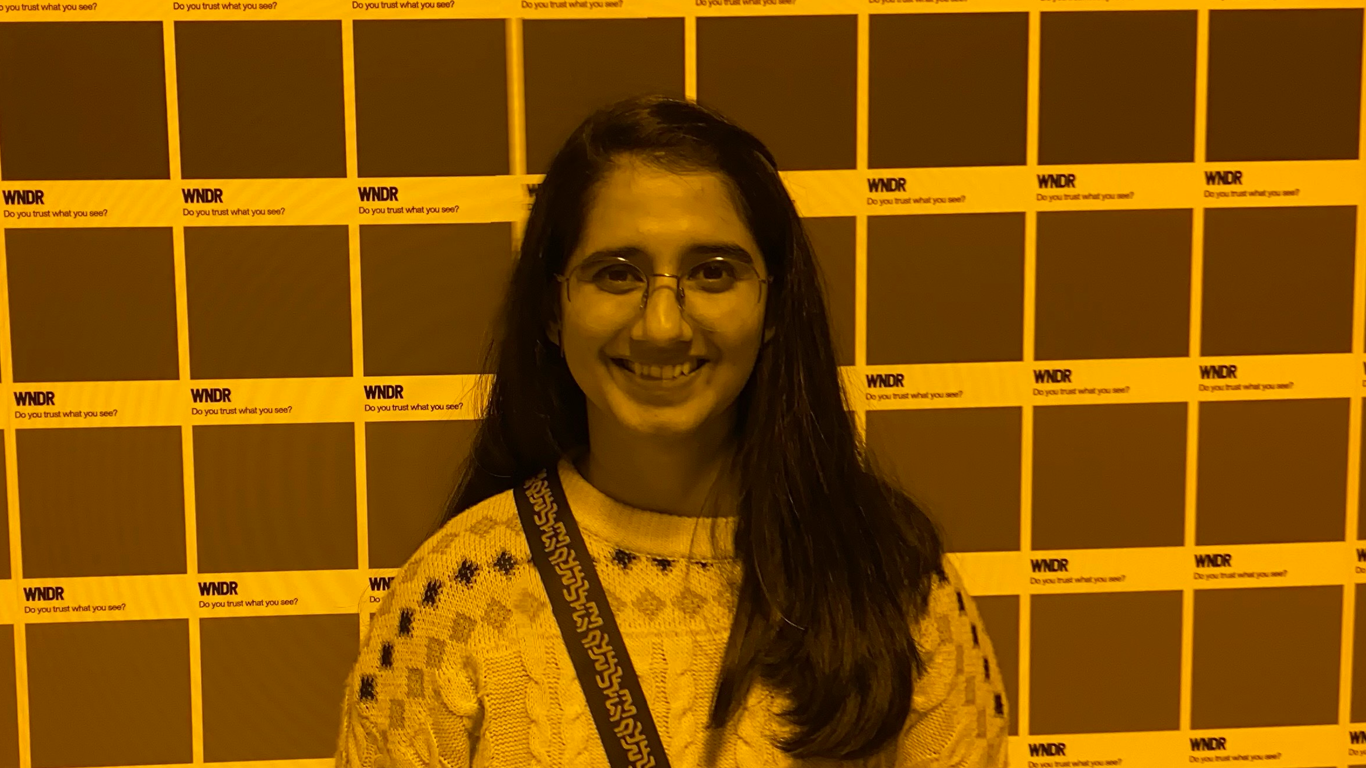
Prapti Verma is a Toy & Game Designer based in Boston, MA.
She currently serves as Product Manager & Editor at Thames & Kosmos and Chapter Co-Chair of WiT Boston.
Recent Blogs


Recent Blogs
Reviews
Toy Review: Spin Master's New Ms. Rachel Collection
Press Release
The Toy Association™ & Javits Center Announce Toy Fair® Dates through 2032
Play Through History
The $2.98 Toy Submarine That Alarmed the Father of the Nuclear Navy Did a Revell model kit really reveal America's Polaris submarine secrets to the Soviets?
General
Introduction
The Bloom Report
Elana Woldenberg Ruffman: Section 301 Forced Labor Tariffs Case
See more
Recent Wiki
COMMENTARY AND OPINION EDITORIALS
Rich Mazel: "He's a Good Kid" What one high school inventor taught me about how our industry should treat the next generation
PEOPLE
Ben Hansen on making Boppo, Computer Programming and more!
PEOPLE
Robb LaFlamme: Building Categories, Chairing the TAGIEs, and Giving Back Beyond the Toy Aisle
MISCELLANEOUS
Meet Gilbert: Your Guide to The Toy Association’s Toy Desk
REST IN PEACE - OBITUARIES
Laure LeBlanc's Tribute to John Fusi
See more
POP's Got Talent

POP Entertainment
Randy Klimpert Shares his Ukulele Collection
POP Entertainment
Steve Casino Peanut Art
POP Entertainment
Everyone's Talking about POP!
POP Entertainment
Princess Etch - a Multi-Talented Etch A Sketch Artist
POP Entertainment
Joseph Herscher of Joseph' s Machines.
See more
Recent POPcast

Hidden Role: The Brains Behind your Favorite Games
Brent Bushnell talks Two Bit Circus, VR, & STEAM (Part 1)
Hidden Role: The Brains Behind your Favorite Games
Tim Walsh Celebrates the 30th Anniversary of Blurt!
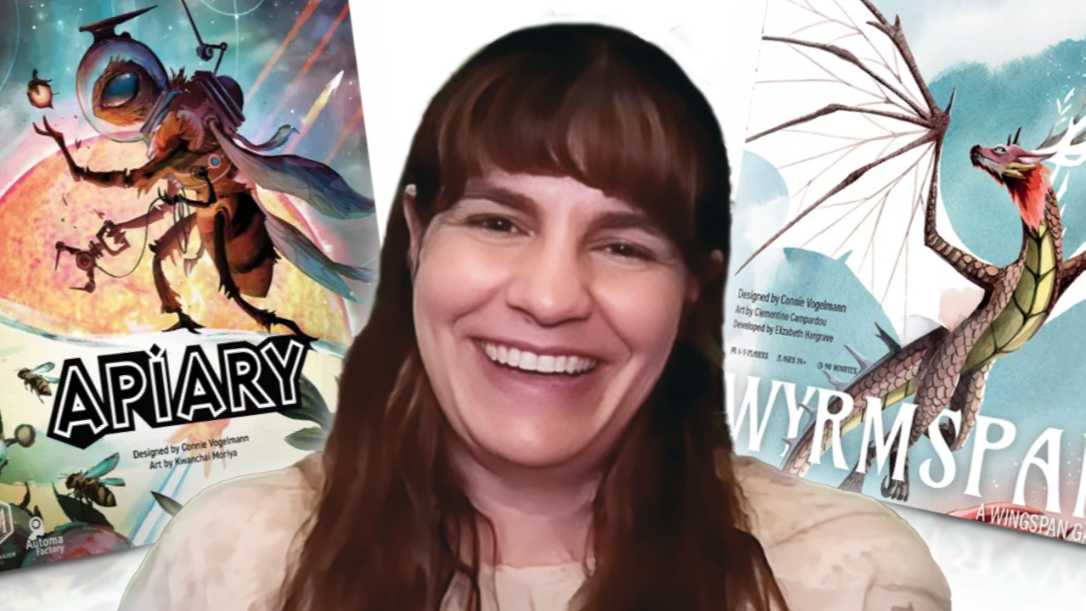
Hidden Role: The Brains Behind your Favorite Games
Connie Vogelmann designed Apiary & Wyrmspan!

Hidden Role: The Brains Behind your Favorite Games
Bob Fuhrer... Is THE Crocodile Dentist!

Hidden Role: The Brains Behind your Favorite Games
Tom Dusenberry... Bought Atari, Wizards of the Coast, and Avalon Hill!
See more
POPDuos

POPDuos: Interviews with Legends and Leaders
POPDuo: Richard Dickson, Mattel’s President & COO, and Kedar Narayan, Young Inventor Challenge AMB

POPDuos: Interviews with Legends and Leaders
POPDuo: Will Shortz and Josh Wardle

POPDuos: Legends and Leaders Explore Creativity
POP Duo: Elan Lee, Co-Founder, Exploding Kittens.and Jeff Probst, Host and Exec Producer, Survivor

POPDuos: Legends and Leaders Explore Creativity
POP Duo: David Fuhrer, MNG Director, Blue Sq Innovations & Shawn Green, past Dodgers & Mets MLB Star

POPDuos: Legends and Leaders Explore Creativity
POP Duo: Bob Fuhrer, Founder, Nextoy and Tom Fazio, Golf Course Designer
See more
Featured Articles
The Bloom Report
Toy Inventors--The Heart and Soul of the Industry
The Bloom Report
Brian Turtle: 'Endless' Stories, Advice, Kevin Bacon and More! tBR Person of the Week
Biographies and Interviews
Jonathan Levy on Jon2.0 - from Co-Founding Mastermind Toys to Spin Master
Biographies and Interviews
Andrew Perlmutter's Journey from Glencoe to Funko with Crazy Ideas that turned out Golden
See more