Katherine Kaiser: Bop It Is Filled With Unusual But Incredible Secrets
by Katherine Kaiser | 13 Nov 2026
General
Hey, it's Katherine.
I've come across Bop It hidden secrets throughout this year alone than any of the nearly 18 years I've been collecting. So, I'm gonna talk about some of my favorites.
Firstly, I love discovering Test Modes and Revision Numbers. A Test Mode is a secret manufacturing technique activated by holding a combination of the actions, as well as either pressing Reset or removing a battery and reinserting it, to test all the functionalities of the unit and play all the sounds programmed into the sound chip of the microcontroller. A Revision Number is an identification number in Test Mode, similar to a software version number. Think of it as you're updating your phone, and it says like 'iOS 27.2' or whatever. Sometimes the same Bop It versions have different Revision Numbers, because they can't connect to the Internet to update their software, so Hasbro releases a whole new unit.
My second favorite thing is something I found out in the Bop It! Bounce (2010). When putting Bop It! Bounce into Test Mode, and you get to a certain part of the Test Mode, you spam the buttons a bit and then it spits out a number: 268,435,455. Now that's huge already that a Bop It can say that number. But it gets better. If you exit out of Test Mode, it will move 268,435,455 to your total hits, but no matter how much you play and add more to the total hits number, the number will not budge. This is because 268,435,455 is 2^28 − 1, which is 28 consecutive ones in binary, and zero counts as a number in this, so you actually have a zero 28 times for 0, and you have a one 28 times for 268,435,455.
Third thing, the pitch. Any Bop It from 1997 to I'd say about 2017(?) if you had multiple units of one version, they would not sound the exact same. The crystal oscillator (or RC oscillator in 2009 and later units) inside the microcontroller of the main circuit board determines the pitch of a Bop It. This microcontroller is hidden under a black epoxy blob. We can determine the actual pitch of a Bop It by pulling out an oscilloscope and measuring the beep it makes in Test Mode in Hertz. The beep is a sine wave that is played at a certain frequency to test the quality of the speaker. Take Bop It! (2009) for example. The lowest sine wave I've recorded is 780 Hz, and the highest is about 950 Hz. Now, with two different units that sound very close to the same, they actually won't be exactly the same because the frequency could change a little bit when being measured. So, one could read 905 Hz for example, and another one could read 895 Hz. (True story.) Now in my archiving for my Bop It videos and unboxings when I obtain more Bop It! (2009) units, I have set out 10 major pitches for that version. But, if the sine wave varies and isn't always going to be exactly 905 Hz on two different units, and one would be like 902 Hz for example, technically speaking, you could have 171 different pitches of Bop It! (2009) (950 − 780 = 170, and you are counting 950 as one as well, so 171), and it would take years to obtain one of each of the 171 pitches.
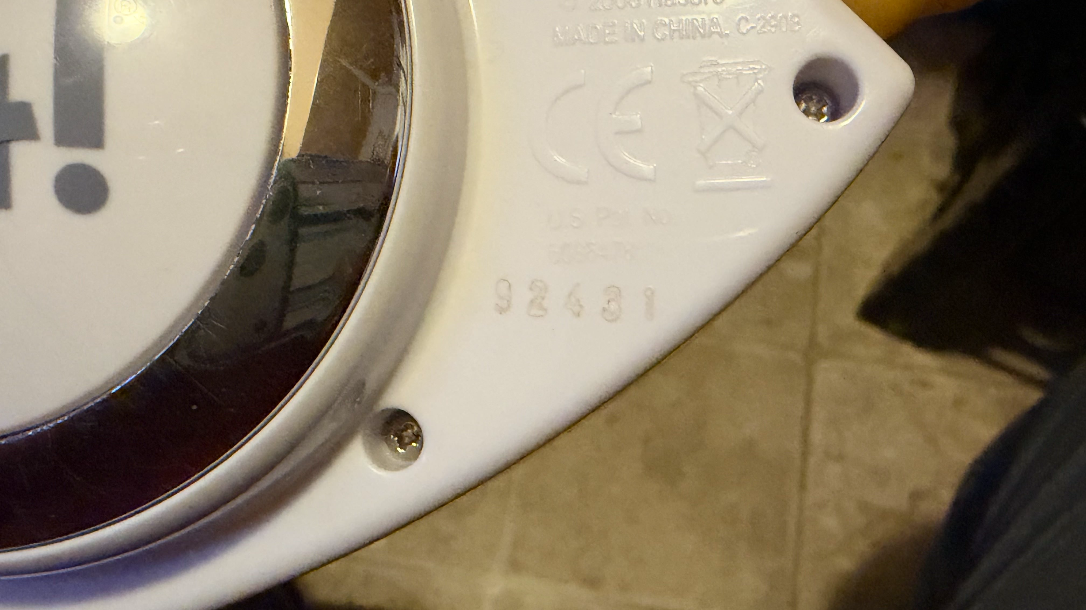
The last thing is, and one of my viewers actually discovered this on my livestream yesterday, is that you can identify the manufacturing date on any Bop It unit (I think from 2009 to now)! So somewhere on the Bop It, you will see a five-digit number. I'll take the Bop It! (2009) for example. The cover image of this blog post shows where it is on the Bop It! (2009). So let's take that number. 92431. Now, in Bop It! (2009) units, the first number represents the year, so 9 is 2009, 0 is 2010, 1 is 2011, 2 is 2012, 3 is 2013. For the white English Bop It! (2009) units we will only focus on 9, 0, and 1. So, you see this one is a 9, so this was manufactured in 2009. Now the next three numbers are very fascinating; this number represents the Julian date, or the number day in the year, so for example 365 would be December 31, as it's the 365th day of the year. (A leap year would not work here since neither 2009, 2010, or 2011 were a leap year...) So the number we see is 243, and the 243rd day of the year is August 31. So we know that this Bop It! (2009) unit was manufactured on August 31, 2009. The last number, the 1, is the factory number. And on all of the Bop It! (2009) units I have, they all end in 1, so that must be the factory number in China where it was made. Now, units manufactured in 2011 will have a • at the end of the number, and that is more of a Hasbro Quality Control mark than anything, but I've only seen that on my 2011s.
And what makes the Bop It! (2009) manufacturing dates especially unusual, if they aren't unusual already, is almost all of the days that are listed by the code fall on a Monday, with a very rare occasional Tuesday. This means in order for me to find one that was manufactured on my birthday, September 26, the only way is to find a 2011 unit, and hope that it has the code, 12691•. Other Bop It versions like the Bop It! (2019) were manufactured on a Wednesday sometimes, but the 2009s are more worthy of identifying in my opinion. The manufacturing date on the cover of this blog post is from my very first Bop It. So, if Bop It! (2009) units started manufacturing in 2009, then that means the media has been lying to everyone, and that I was right that Bop It! (2009) actually was 2009 and not 2008 like the copyright year on the shell says...
These are only a few of the favorite things I've discovered or some viewers have discovered. But I have influenced them and hyped these discoveries, because a kid that has a Bop It doesn't think about these kinds of things with their Bop It; the fun enjoyment of the game is all that matters to them. But in reality, their favorite game went through a lot behind the scenes, not just research and development or concept markups, but actual manufacturing and programming, to become what has made a tremendous impact in their life. As well as mine... ♡


Recent Blogs
General
Katherine Kaiser: Bop It Is Filled With Unusual But Incredible Secrets

Press Release
People of Play™ Announces Winners of 2026 Toy & Game Innovation Excellence Awards - The TAGIEs
Press Release
2027 Toy of the Year® Finalists Unveiled

The Bloom Report
Jose Antonio Santana: Excerpt from "Beyond Toys. a life selling dreams" - The Last Game
Reviews
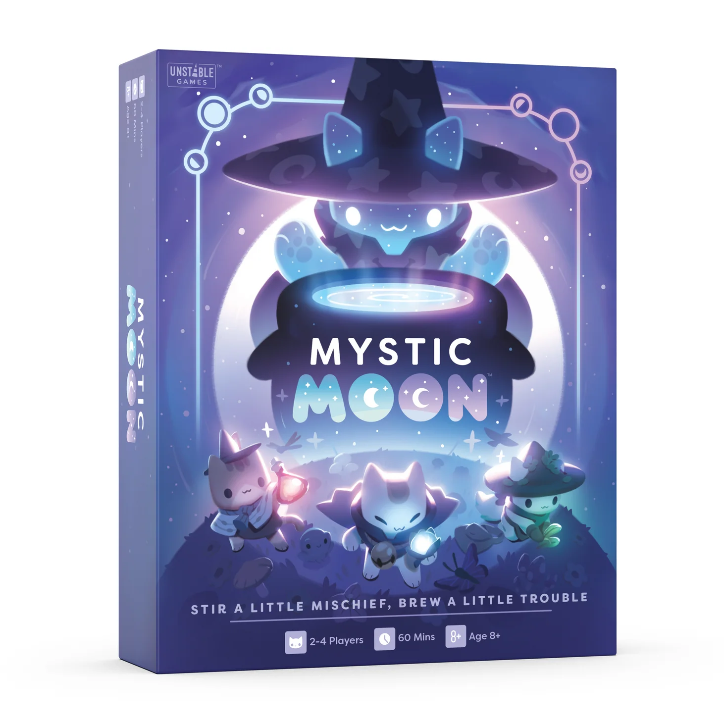
Game Review: Mystic Moon
See more
Recent Wiki
PEOPLE
Sculpting a Galaxy: Bringing Ralph McQuarrie’s Star Wars Vision to Life
PACKAGE DESIGN, PROTOTYPES
Spin Master and Design Edge Join Forces to Create Collectible Packaging for Monster Jam x Transformers Collaboration
BOOK REVIEWS
Toy Review: Minecraft Sticki Rolls
BOOK REVIEWS
Toy Review: Sticki Mates
COMMENTARY AND OPINION EDITORIALS
Optimism Is the Foundation of Innovation
See more
POP's Got Talent

POP Entertainment
Randy Klimpert Shares his Ukulele Collection
POP Entertainment
Steve Casino Peanut Art

POP Entertainment
Everyone's Talking about POP!
POP Entertainment
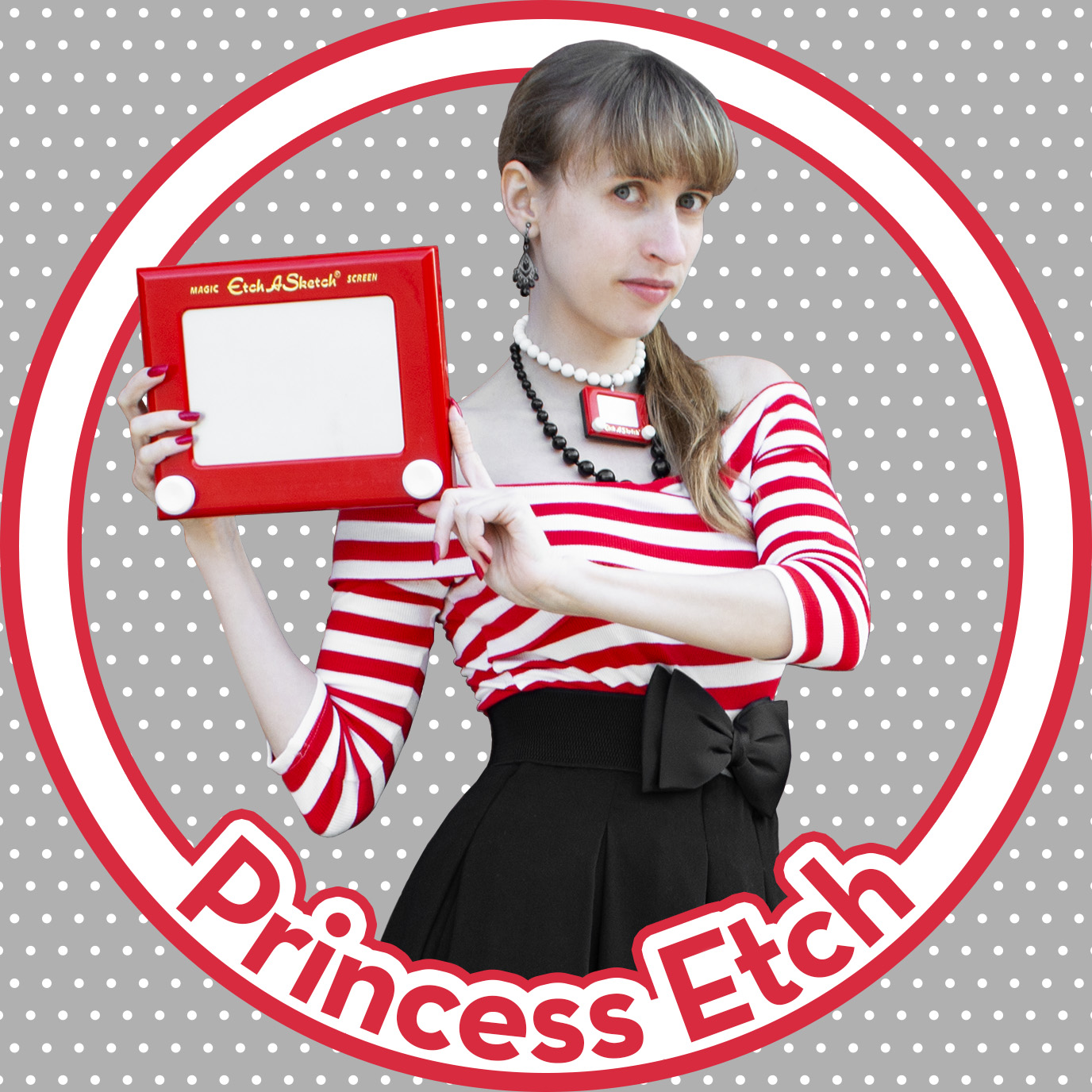
Princess Etch - a Multi-Talented Etch A Sketch Artist
POP Entertainment
Joseph Herscher of Joseph' s Machines.
See more
Recent POPcast

Hidden Role: The Brains Behind your Favorite Games
Brent Bushnell talks Two Bit Circus, VR, & STEAM (Part 1)
Hidden Role: The Brains Behind your Favorite Games
Tim Walsh Celebrates the 30th Anniversary of Blurt!
Hidden Role: The Brains Behind your Favorite Games
Connie Vogelmann designed Apiary & Wyrmspan!

Hidden Role: The Brains Behind your Favorite Games
Bob Fuhrer... Is THE Crocodile Dentist!

Hidden Role: The Brains Behind your Favorite Games
Tom Dusenberry... Bought Atari, Wizards of the Coast, and Avalon Hill!
See more
POPDuos

POPDuos: Interviews with Legends and Leaders
POPDuo: Richard Dickson, Mattel’s President & COO, and Kedar Narayan, Young Inventor Challenge AMB

POPDuos: Interviews with Legends and Leaders
POPDuo: Will Shortz and Josh Wardle

POPDuos: Legends and Leaders Explore Creativity
POP Duo: Elan Lee, Co-Founder, Exploding Kittens.and Jeff Probst, Host and Exec Producer, Survivor
POPDuos: Legends and Leaders Explore Creativity
POP Duo: David Fuhrer, MNG Director, Blue Sq Innovations & Shawn Green, past Dodgers & Mets MLB Star

POPDuos: Legends and Leaders Explore Creativity
POP Duo: Bob Fuhrer, Founder, Nextoy and Tom Fazio, Golf Course Designer
See more
Featured Articles
The Bloom Report
Toy Inventors--The Heart and Soul of the Industry
The Bloom Report
Brian Turtle: 'Endless' Stories, Advice, Kevin Bacon and More! tBR Person of the Week
Biographies and Interviews
Jonathan Levy on Jon2.0 - from Co-Founding Mastermind Toys to Spin Master
Biographies and Interviews
Andrew Perlmutter's Journey from Glencoe to Funko with Crazy Ideas that turned out Golden
See more